
Lighting control is often the first "smart home" upgrade homeowners consider, and for good reason — it delivers noticeable day-to-day convenience and doesn't require the learning curve of a full home automation system.
What Lighting Control Actually Does
A basic smart bulb or smart switch lets you turn lights on/off and dim them from an app instead of a wall switch. A true lighting control system does considerably more:
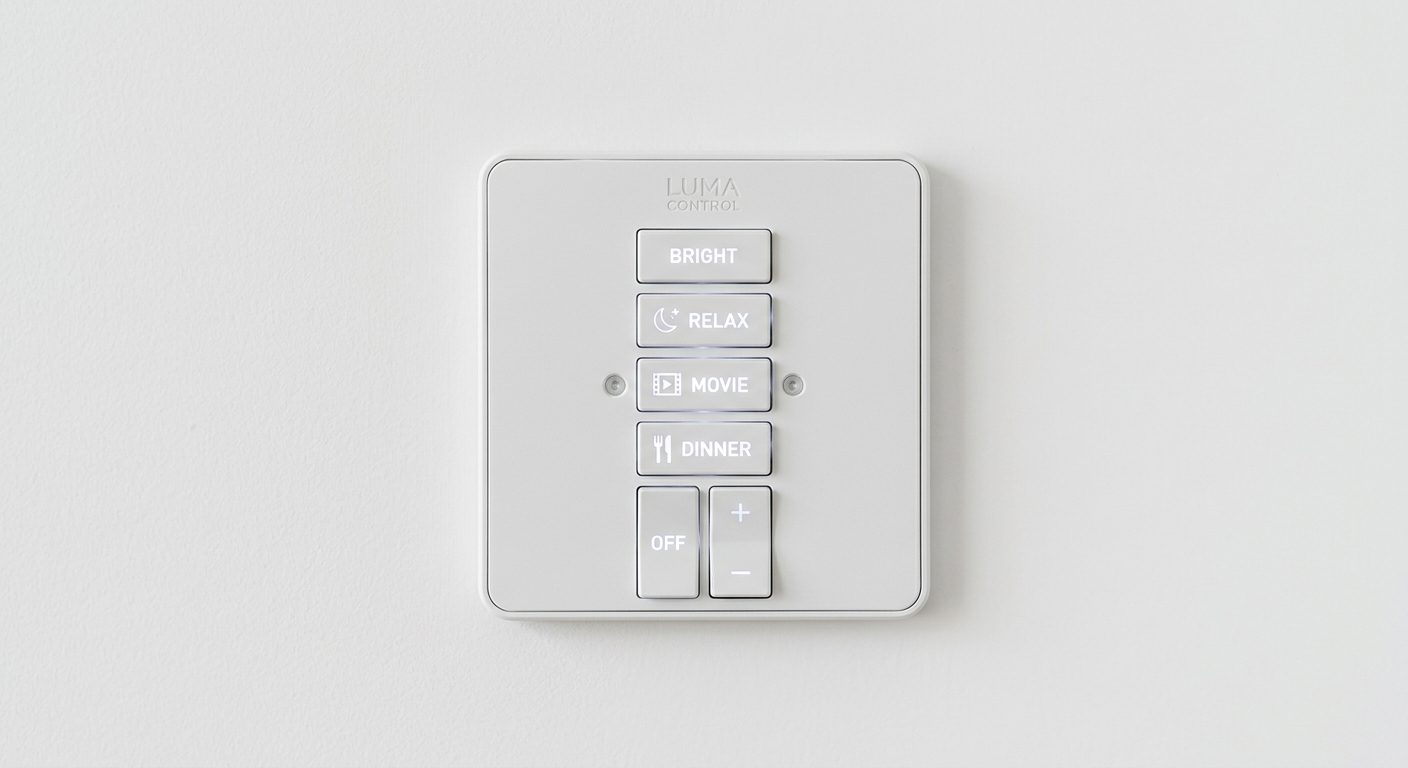
- Scenes — one button press sets multiple lights to specific levels simultaneously ("Movie Night" dims the room and turns off overheads; "Morning" brings everything to full brightness).
- Scheduling — lights that automatically adjust based on time of day, sunrise/sunset, or occupancy.
- Zone grouping — controlling lights by area (all outdoor lighting, all downstairs) rather than one fixture at a time.
- Load management — properly handling dimming for LED fixtures, which behave differently than the incandescent bulbs most dimmers were originally designed for, avoiding flicker or buzzing.
The difference between "smart bulbs" and "lighting control" is mostly this last point — a real system is designed around how the electrical circuits and fixtures actually behave, not just adding wireless control to individual bulbs.
Switches vs. Bulbs
Smart switches (replacing the physical wall switch) are generally the better long-term choice over smart bulbs for whole-room control: they work with any bulb (including bulbs you already own), don't lose smart functionality if someone swaps in a regular bulb, and don't require the physical switch to stay "on" at all times for the smart feature to work — a common source of confusion and frustration with bulb-based systems.
Smart bulbs still make sense for specific fixtures needing individual color/brightness control (accent lighting, a single lamp) where switch-level control isn't granular enough.
Zones That Make Sense for How You Live
Grouping lights by how a space is actually used — "outdoor," "main living areas," "bedrooms" — is usually more useful than controlling every fixture individually. A well-designed zone layout means a single "Goodnight" scene can turn off every downstairs light and outdoor light with one button, rather than requiring room-by-room control.
Integration With Smart Home Systems
Lighting control integrates cleanly with broader smart home platforms — a "Good Morning" automation might simultaneously raise shades, turn on specific lights, and adjust the thermostat, all from one trigger. Even if you're not planning a full smart home system today, choosing a lighting control brand known for solid integration support keeps that door open for later.
The Bottom Line
Lighting control is one of the more immediately useful smart home upgrades because the benefit shows up every single day without requiring any change in behavior — a well-designed scene or schedule just works quietly in the background from day one.